
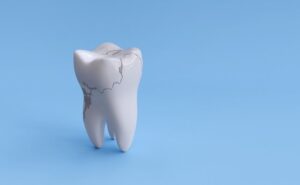
Cracked teeth are notoriously difficult to deal with because they can be hard to find. Because symptoms come and go, people wait, which tends to make matters worse. After more than 20 years in dentistry and endodontics, I’ve learned that damage is easier to save the sooner it’s seen. Here’s everything you should know about tooth cracks, including signs to watch for so you can get help when you need it.
Why Are Cracked Teeth Hard to Find?
A crack can be as thin as a hair, and it doesn’t always show up on an X-ray. Finding one usually takes a careful exam, asking specific questions, testing the tooth with a bite stick, looking closely under magnification, and sometimes using dye or a special light. Sometimes, it can even take more than one visit!
When eating, drinking, brushing, or flossing, look for these signs. Having one of these symptoms doesn’t always mean you have a cracked tooth, but they’re good leads to investigate.
- Pain when you bite, especially when you let go
- Sensitivity to hot or cold
- Discomfort that’s hard to pinpoint
- Swelling in the gum near a tooth
Why Do Teeth Crack?
Enamel is the hardest substance your body can make, but it’s not indestructible. It’s made to withstand chewing and biting forces of normal wear and tear. However, biting down on hard things like ice, crusty bread, or popcorn kernels, habitual teeth grinding (bruxism), old dental work, and facial injuries can all cause cracks.
What Does Treatment Look Like?
The solution depends on the crack. Tiny surface lines, often called craze lines, are common and usually harmless. A crack in the chewing surface may be repaired with bonding or covered with a crown to hold the tooth together. If the crack reaches the nerve, a root canal may be the best way to save the tooth. A restoration will be needed on top to give you back the function and appearance.
When a crack runs below your gumline or splits your tooth, removing it is often the safest option. That said, the goal is always to keep your natural tooth as long as it’s safe to do so.
What Should You Do Until You’re Seen?
If you have a cracked tooth, avoid chewing on that side and don’t consume very hot or cold food or drinks. If you have swelling, severe pain, or a fever, try to visit your emergency dentist right away. The earlier you catch and treat the damage, the happier your smile will be.
About the Author
Dr. Dhiren Ahir has two decades of experience that he uses to give patients in Denton the high-quality care they deserve. He is here for those experiences dental emergencies, like a cracked tooth, with same-day urgent visits. By using state-of-the-art technology, we can get to the bottom of the issue and give you the prompt care you deserve. If you’re worried about dental damage, the fastest way to schedule an appointment is by calling our office at 940-514-0333.